 Things to help get through long winter days: hot chocolate, a couple of good books (one of which has to be about food), knitting, and a goofy-looking owl.
adventures in trying to get full.
Things to help get through long winter days: hot chocolate, a couple of good books (one of which has to be about food), knitting, and a goofy-looking owl.
Hey lookie!
 I bought a set of heart-shaped cookie cutters.
Yay!
While I generally prefer drop cookies over cookies that need to be rolled and cut, I can’t resist a heart – especially if it is made of chocolate biscuit, which I’m planning to do for a particular date in February, no big deal.
I also generally prefer to keep my shoebox of a kitchen as uncluttered as possible, but here’s the thing: perhaps it is the words of a sugar-addled mind, but with all the kitchen tools I accumulate and use over the years, there is a fond memory attached to each of them – the spatula that iced an 80-year-old’s white chocolate birthday cake, the cheery yellow Rosti ladle that served us soup to get through another winter – or the mixing bowl from Longer Hollow Legs’ grandmother, which has seen multiple generations’ worth of doughs, batters, salads and more. I have come to see how cooking holds things together (particularly my sanity), and when I’m feeling low, sitting in my kitchen with all my inanimate pots and spoons around me is very comforting indeed.
There was a scene in an animated movie about dinosaurs that I watched when I was a kid where some dinosaurs saw a tree in the distance that was full of leaves, and they thought, “Yay! Food!” because Earth was changing and there wasn’t enough food to eat, but then before they could get to the tree, a whole bunch of other dinosaurs came and ate it all.
That tree looked like a giant broccoli.
So now whenever I eat broccoli, I think of dinosaurs.
For a while after watching that movie, I would re-enact that scene with the broccoli I ate, nibbling first the florets, just like those dinosaurs did. Then the scene would wrap with me eating the stem. The end.
While I could easily forage through a large steaming bowl of plain, just boiled broccoli, I also love enjoying soft, nubby bits of broccoli in a bath of creamy, thick soup. I don’t imagine the Earth ever had milky waters flowing over it, but perhaps in dinosaur times…
Cream of Broccoli
makes 6-8 servings; basically one big pot
1 small yellow onion
1-2 garlic cloves
a blob of butter
2-3 stemless heads of broccoli
at least 500 ml vegetable/chicken stock or water
250 ml 35% cream
2 tbsp cornstarch
2 tbsp water
salt and pepper
Dice the onions and smash the garlic. In a large stock pot, heat a good blob of butter over medium heat. Drop in the onions and garlic, stirring occasionally and letting the onions soften and grow translucent. Meanwhile, break the broccoli heads into small pieces either with your hands or chopping it up. I prefer to omit the stems because they can be a little woody sometimes, and I like soft, tender nubs of broccoli in something as soothing as cream soup.
 Add the broccoli to the pot and stir. Let it cook for another minute or so, and add enough stock/water to just barely cover the vegetables. Bring it to a boil, and then cover the pot, turn the heat down, and let it simmer until the broccoli is tender. Pour in the cream, and enjoy the billowing of the cream as it mixes with the broth. If you would like your soup thicker, dissolve the cornstarch in the water in a small bowl. Stir into the soup, and heat until it comes close to a boil so the starch gelatinizes and thickens up the soup. Take the soup off the heat, and using an immersion blender, lightly blitz the soup to help break down the broccoli florets into smaller pieces – I like a soup with smaller chunks, so how vigorous you are with this is up to you. Add salt and pepper, and voila! Enjoy slurping up some vegetation from the bountiful milky waters in your soup bowl.

Our home might be mistaken for a jungle, as there are plants everywhere: a ficus tree in the living room that looks longingly out onto the street, a fern in the office fluffing her leaves like a true diva, a palm plant threatening to poke you in the eye, and lots more…not to mention the bamboo shoots that have taken over the bathroom. Being surrounded by so much greenery is instantly calming, and particularly soothing to the eyes during long and dark Canadian winters. Similarly, a pile of green on the dinner plate is most welcome: a refreshingly bright respite from the winter blues (or greys).
Outside all of the virtues of local eating, it is days of the year like these that I am very grateful for the miracle of modern transport to bring crisp Californian produce to a barren wintery hinterland. This particular dish is inspired by one in Yotam Ottolenghi’s Jerusalem.
Green beans and sugar snap peas warm salad
serves 4-6 as a start or side dish
3-4 large handfuls of sugar snap peas
2-3 large handfuls of green beans
1 cup whole hazelnuts
2 mandarin oranges (or 1 navel orange)
olive oil
sesame oil
black and white sesame seeds (optional)
First, trim the vegetables if they need trimming. I used frozen green beans (blasphemy!) because I had them – use fresh if possible, but sometimes I find that green beans in the winter are very fibrous and woody. Heat a generous tablespoon of olive oil in a large frying or saute pan over medium-high heat, and throw in the sugar snap peas and green beans. Cover loosely with a lid so they steam a little, and stir occasionally. Meanwhile, in a small heavy pan (preferably cast iron), roast the hazelnuts over medium-high heat until lightly coloured. Pour into a mortar and pestle into smaller pieces. When the vegetables are cooked through but still have a little bite, take them off the heat and add the pestled hazelnuts, the zest of the mandarin oranges, and a dribble of sesame oil. Sprinkle over the sesame seeds (if using), and squeeze over some of the mandarin’s juices just before serving.
This would go nicely beside some roasted chicken to make a sturdy dinner, but I could eat this on its own, straight from the pan, standing over the stove. The hazelnuts I used happened to be picked up from a San Francisco farmer’s market during a road trip this past summer, and stored in the freezer, waiting to be brought out as a bittersweet reminder of warmer days.


Celiacs rejoice! (Cue angelic trumpets, round cherub babies gathering on ceilings, and gold leaf trim.)
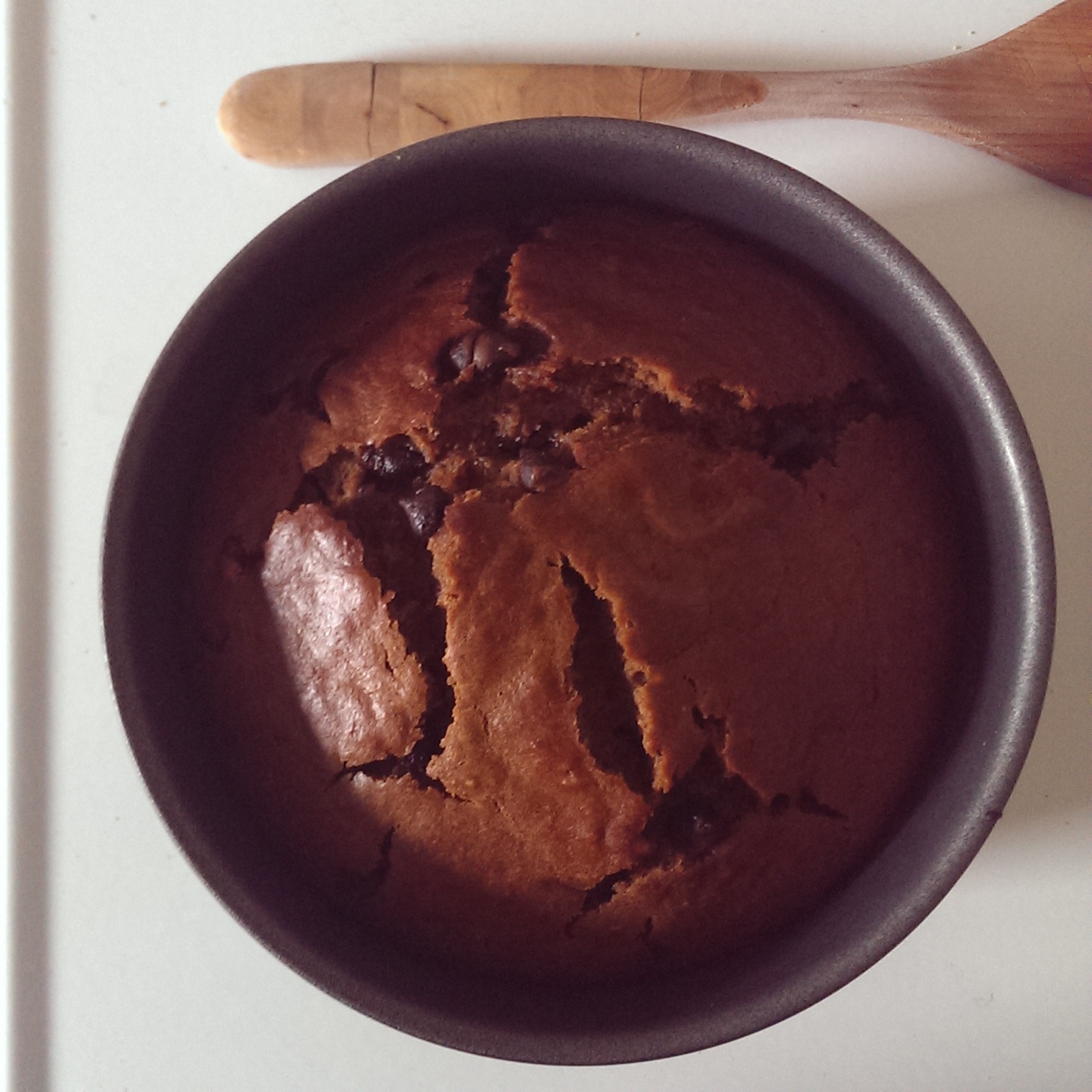
Here is a gluten-free version of the vegan gingerbread cake from a few weeks prior.
Through stealthy research on the Internet, I came upon the decision to replace each 100 g of all-purpose flour with 115 g of a mix of gluten-free flours. Originally I did not weigh my flour, but assuming faith in my super duper flour scooping skills I looked up the density of all-purpose flour to convert volume to weight. I used my own mix of gluten-free flours that I had lying around, making sure I included some high-protein flours (chickpea, buckwheat) to account for wheat flour being about 16% protein, thereby mimicking what I was replacing. I used coconut oil instead of vegetable oil, since it has a higher content of saturated fat, and would hopefully help hold the batter together better. At the last moment I added an egg (I was bringing the cake to a party so I needed insurance that it would hold together), which de-veganized it, but I imagine you can omit the egg and life will go on.
So here it is, gluten-free ginger carob cake, for you and yours.
Gluten-free Ginger Carob Cake
makes one 8″ round cake
133 g brown rice flour
53 g chickpea flour
44 g buckwheat flour
1-1/2 tsp baking powder
1-1/2 tsp dried ginger
1-1/2 tsp cinnamon
1/4 tsp nutmeg
2/3 cup brown sugar
1 tbsp psyllium
3/4 cup water
1 tsp balsamic vinegar
1 egg
6 tbsp coconut oil
8 tbsp molasses
a handful of carob chips
In a large bowl, mix together the flours, baking powder, spices, half the brown sugar, and the psyllium. In another bowl, whisk together the other half of brown sugar, the water, vinegar, egg, oil, and molasses. Pour the wet ingredients into the dry and whisk until well incorporated. Pour into a lined baking tin. Sprinkle the carob chips on top of the cake batter in the pan right before popping in the oven. Since gluten-free batter is usually runnier, doing it this way will ensure that the chips don’t just sink to the bottom of the cake during baking. Bake in a preheated 350 F oven for about 40 minutes, or until the top looks dry.
Cool in the pan until warmish, and then turn out onto a plate to cool. Wrap in plastic right away, as gluten-free cakes tend to be a little dry. If you aren’t going to serve the cake for a few days, consider making a thin simple syrup and brushing it over a few hours before serving to moisten the cake. Simple syrup is made by gently heating water and white sugar (3:1 ratio) until the sugar dissolves. When the syrup is room temperature, brush it over the cake.
The lone wolf days of winter are officially here.
Cue desolate wailing.
Actually, I don’t mind the cold temperatures. It inspires a change in rhythm, a natural contraction after the languid, loose feeling of summer: the city gets quieter, the snow muffles all sounds (never mind the two scarves and toque and parka hood covering my ears), allowing time for introspection and measured pacing. Days of solitude require meals that need to be eaten slowly, methodically. During this time of year, I prefer dinners that lend a feeling of solidity when they are enjoyed – a period at the end of the sentence, decided punctuation to end the day.
Noodles in soup are the perfect winter comfort food: nourishing, with endless possibilities for embellishment, and simple enough so there is time to knit or catch up on reruns before turning into bed. A meal like this leaves me feeling full and complete, but not heavy, thereby avoiding the accumulation of an extra winter layer that is less easily removed than a sweater…
Soba Noodles in Miso Broth
makes two servings
for the broth:
1 stalk of lemongrass, cut into 2″ logs
1 Thai chile, slit open
1″ fresh ginger, cut into thick coins
1 heaping tablespoon of brown miso paste
1 good splash each of mirin, rice vinegar, and fish sauce
1 somewhat good splash of tamari soy sauce
3-4 cups water

for the meal:
2 little bundles of Japanese soba (buckwheat) noodles (though I usually make more, so I can make cold noodle salad the next day)
some vegetables, like enoki mushrooms
some garnishes, like green onions and dried seaweed
First, bring 2 L of water to boil in a big pot to boil the noodles. Meanwhile, throw all the ingredients for the broth into a small saucepan and bring to a boil. Cover and let simmer on low heat for 10 minutes. Keep an eye on when the noodle water begins to boil; when it does, throw in a touch of salt and the noodles, and let it boil rapidly, stirring occasionally to make sure the noodles don’t stick to each other. While your kitchen windows steam up with all this boiling, you can prepare your vegetables and garnishes, by which I mean look in your fridge and see what you feel like eating that night. I used enoki mushrooms, which are so thin and delicate they don’t really need pre-cooking beyond being steeped in hot broth. When the noodles are cooked (should take 5-10 minutes), drain and rinse in cold water. Pile some noodles in the bottom of two large bowls, and arrange your vegetables and garnishes on top. Pour the steaming hot broth over top, and serve immediately.
 We ate the noodles with some pan-fried shrimp tossed in garlicky butter. I think a fried egg would go very well with this, slid on top of the noodles with the yolk still runny so that its yellowy goodness can get acquainted with its noodley companions when it is cracked open.

May your belly feel warm and full!
Parties can be a little stressful: what to wear? What to bring? What time should I arrive to appear cool? What is my exit strategy?
This season tends to have a lot of parties back to back, so the anxiety can start to mount – when really the point of it all is to enjoy eachother’s company and eat a lot of good food.
To answer the question of what to bring, and to fulfill the good food quota, you can make these fish and fava bean croquettes – yay! These came into being because I wanted to make something out of what I had already, thereby minimizing shopping time. Also, the fava beans need to be boiled beforehand, which is a step that requires little supervision, so these croquettes practically make themselves. Moreover, it is my strong belief that limitation begets creativity, and anything in little cute round pancake-y shapes will be a sure win at a party.
So remember: take a deep breath, relax, let’s go putter in the kitchen to make something to eat, and black goes with everything.

Fish and fava bean croquettes
makes about 20 little croquettes that are 2″ diameter
1 cup dried fava beans, soaked overnight
2 large tilapia fillets (or another mild white fish)
1 green onion, diced
1 small handful parsley (stems and leaves), diced
1 small Thai chile, minced
2 cloves garlic, minced
zest of half a large lemon
1 egg
a good splash each of mirin and fish sauce
about 1/3 cup all-purpose flour
salt and pepper
Ok. So. After soaking the fava beans overnight, pop the beans out of their skins. This is actually pretty fun, because repetitive actions are mindless and you can solve a lot of life problems while doing this. Throw the de-skinned beans into a saucepan, cover with water, and bring to a boil. Cover and let simmer for 30 minutes or so. Drain most of the water and puree the beans. If they are still a little chunky (fava beans never really seem to soften), it doesn’t matter, because everyone is going to be half-drunk when they eat these (I mean, the chunky texture makes it more interesting). Let the beans cool to room temperature, or refrigerate until you are ready to fry up the croquettes.
When it is fry time, dice the raw fish fillets into small pieces (or you could try pulsing them in a food processor). Mix with the fava beans and everything else. If it seems too soggy, add a tablespoon more of flour. If it seems dry, add a splash of water. Let the mixture sit in the fridge for about 30 minutes while you go pick out your party outfit. To fry, drop a couple tablespoons of sunflower oil in a heavy-bottomed frying pan over medium-high heat. Plop heaping tablespoons of the fish-fava mixture, flipping the croquettes over when they turn an appetizing brown (about 3-5 minutes). I like keeping my croquettes rather plump, which means they might not cook through the middle during the frying time – so pile the croquettes into a roasting dish, and when they have all been fried, throw them into a preheated 350 F oven for 5-10 minutes to make sure the middles are cooked.
Let the croquettes cool to room temperature, and then throw in a lemon half before wrapping up. You can get all fancy and squeeze the lemon juice over the croquettes when you get to the party!

All year long I drink hot water with a few slices of fresh ginger in it, as a cleansing tonic to help with digestion and a cure-all for various ailments. However, it is only when the winter holidays roll around do I seem to think of making gingerbread. Its dark, moist, spicy and complex flavour seems best suited to cold days with friends’ laughter for warmth. Previous years have seen various reincarnations, and this year I continue to vary on the theme. The only consistency with the past is that I base the result on a Nigella Lawson recipe, because she is apparently a domestic, ginger-loving-cake-making goddess.
For 2013, the gingerbread has been cake-ified, if only because it was baked in a round cake tin (because circles = harmony, which is an important theme during the holidays, if not for life), and also vegan-ified, because I keep the company of very lovely vegans. Moreover, it has gotten a facelift with a liberal studding of carob chips, because little melty morsels lend a light-hearted, convivial quality to any foodstuff, and carob has an intriguing, nutty, deep flavour that integrates well with ginger and molasses.
Ginger Carob Cake
makes one 8″ round cake
1-2/3 cups all-purpose flour
1-1/2 tsp baking powder
1-1/2 tsp dried ginger
1-1/2 tsp cinnamon
2/3 cup brown sugar
1 tbsp ground flax
3/4 cup water
1 tsp balsamic vinegar
6 tbsp sunflower oil
8 tbsp fancy molasses
a good handful of carob chips
In a large bowl, mix together the flour, baking powder, spices, brown sugar and flax. In quick succession, add the water, vinegar, oil and molasses. Mix until just incorporated. Fold in a good heap of carob chips. Scrape into an 8″ round cake tin that has been lined with parchment paper. Bake in a preheated 350 F oven for 45-60 minutes, until the top looks dry. In previous years I stuck a toothpick into the middle of the cake to see if it was cooked via how dry the toothpick came out, but this year I didn’t bother, because I’m starting to think that a slightly gooey center in a ginger cake is a good thing.
Serve forth a slice of gingery harmony to your loves.
The best, BEST, butter chicken I ever had was at a hole in the wall in Toronto’s Little India neighbourhood. I don’t remember the name of the place, but I’m sure if I ever walk past it again I will recognize its greasy windows. Set up like a cafeteria, you wait in an unruly line of hungry patrons to place your order and muscle your way past the screaming children hopped up on gulab jabun to squeeze into a red, sauce-stained booth. Served in little Styrofoam bowls with completely inadequate plastic cutlery, it was divinity in disposable dishes.
I always imagined that such deliciousness would be unattainable at home and should be left to the professionals and grandmothers, but I came across a recipe in Longer Hollow Legs’ (= boyfriend) mother’s cookbook of slow cooker dishes. Now that I live in the prairies and can’t drop in to Toronto’s India whenever I like, it feels like a good time to warm the spirits and coat the insides with a little homemade murgh makhani.
I modified the recipe’s instructions to be made in a sauté pan, only because it fit into my schedule better than slow cooking it. The quantities have been tweaked from the original recipe, to maximize flavourful sauce production, as that is the indisputable joy at the center of this dish. I also puréed my own cashews instead of using cashew butter, just because I had whole cashews and didn’t feel like buying the butter.
Butter Chicken
Serves 2 hungry people with leftovers, or 4 people with modest appetites.
1 medium yellow onion, diced
2 cloves garlic, minced
1 tbsp ghee or sunflower oil
2 tbsp freshly grated ginger
2 tbsp brown sugar
1/2 tsp each ground coriander, cumin and turmeric
1/4 tsp cinnamon
1-2 dried chiles or 1/2 tsp chile powder (optional)
good sprinkle of salt
3 big tbsp tomato paste
1 cup chicken broth or water
1/3 cup cashew (or almond) butter, or 1/3 cups cashews soaked in 1/4 cup water overnight
1-1.5 lb chicken meat pieces, cut into medium-sized chunks or left whole (boobs, thighs, whatever. Bone and skin inclusion is up to you. I personally prefer dark meat. The Indian Greasy Spoon place was bone-in, skin-on drumsticks, so let that be your guiding light.)
1 cup sour cream or full-fat yoghurt
a small handful fresh cilantro, chopped roughly
In a large sauté pan, cook the onion and garlic in the ghee/oil until it starts to soften and grow translucent. Add the ginger, sugar, spices, salt, tomato paste, broth/water, nut butter (or ground nuts with soaking water). Take the pan off the heat and using an immersion blender, purée everything until the big chunks are gone. This step is necessary if you use whole cashews, and not necessary if you buy pre-made nut butter, but I like to do it to get the sauce smooth like buttah (oh yeah). Add the chicken meat and a little extra water if the meat is not covered with sauce, and bring to a boil. Cover, reduce heat to medium and simmer until the meat is cooked – how long this takes will depend on the size of your meat…so probably about 15-20 minutes for medium-sized chunks, 30-40 minutes for whole pieces of drumsticks and thighs. Stir in the sour cream and garnish with cilantro. Serve with plain, fluffy basmati rice and bask in heavenly aromas.

Playing around with tea blends is a good way to whittle the afternoon away in the kitchen. Here is a blend of chrysanthemum flowers, green cardamom, sliced almonds, fennel and cumin seeds. Steeped on its own or with a small strip of candied ginger dropped in to lend a touch of sweet spiciness, this blend is vegetal and smooth, reminiscent of cool green meadows and calming warm breezes. A little cup of tea beside you is a small luxury that seems to lengthen the day, giving you more time to curl up on the sofa with a good book.
